
Role
Lead UX Designer
Duration
12 Weeks
Tools
Figma
Team
Brand Voice
Creative

Role
Senior UX Designer
Duration
4 Weeks
Tools
DataDog, Content Square, Figma
Team
Data Analytics
Product Management
February 2026
Uncertainty is the
Design Problem.
Uncertainty is the
Design Problem.
Uncertainty is the
Design Problem.
Moving past opinion-based structural changes to behavioral evidence. Shifting the design strategy from isolated service pathways to a connected confidence-building system.
Moving past opinion-based structural changes to behavioral evidence. Shifting the design strategy from isolated service pathways to a connected confidence-building system.
To inform a navigation and destination page redesign for PODS.com, I paired behavioral pathing from top quote-driving pages with qualitative customer research.
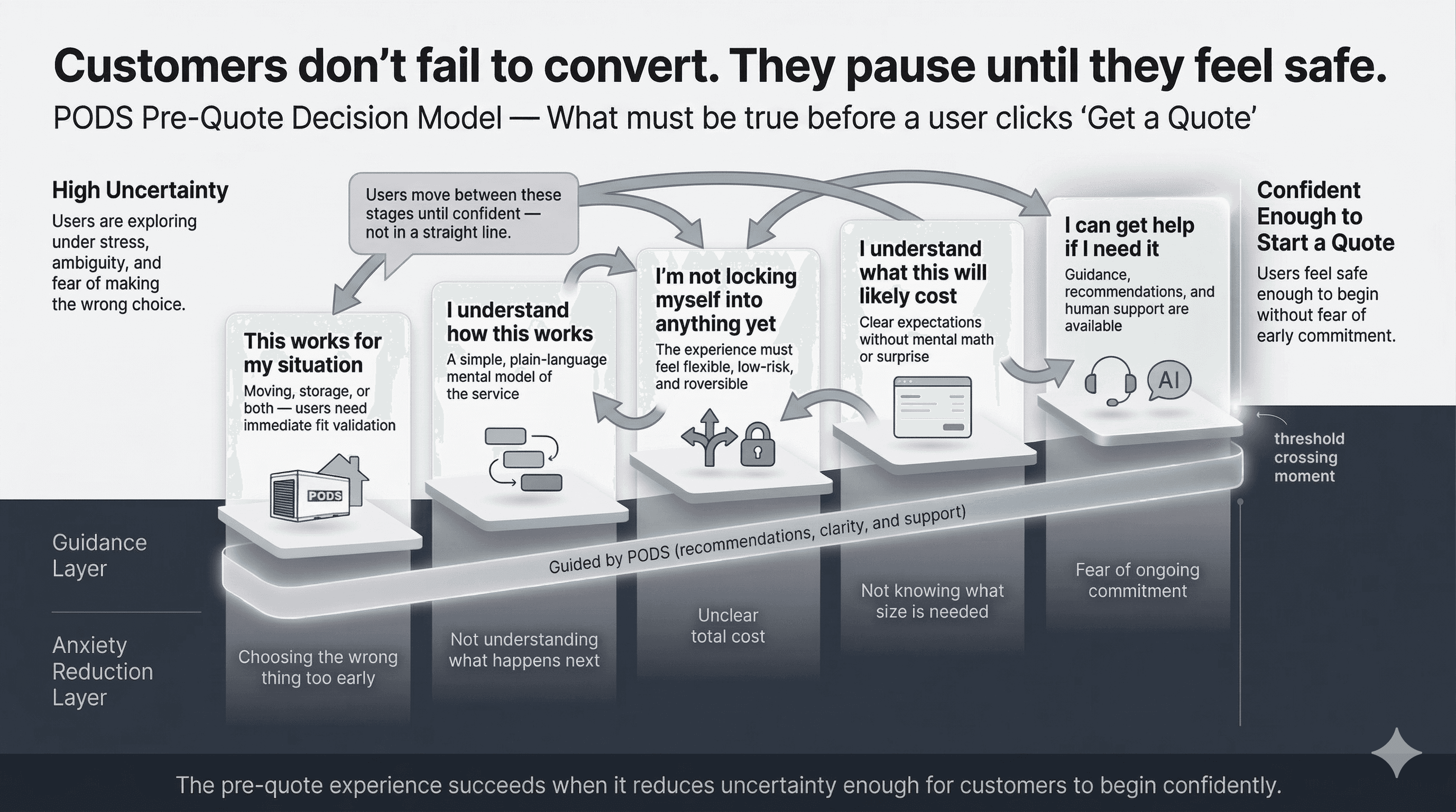
Together, they showed the pre-quote journey was not a simple funnel. Customers were moving across a small set of pages to build confidence around fit, price, size, and service type before they felt ready to get a quote.
To inform a navigation and destination page redesign for PODS.com, I paired behavioral pathing from top quote-driving pages with qualitative customer research.
Together, they showed the pre-quote journey was not a simple funnel. Customers were moving across a small set of pages to build confidence around fit, price, size, and service type before they felt ready to get a quote.
How uncertainty shapes the customer journey
How uncertainty shapes the customer journey
Core Insights
Core Insights
01
Confidence over Content
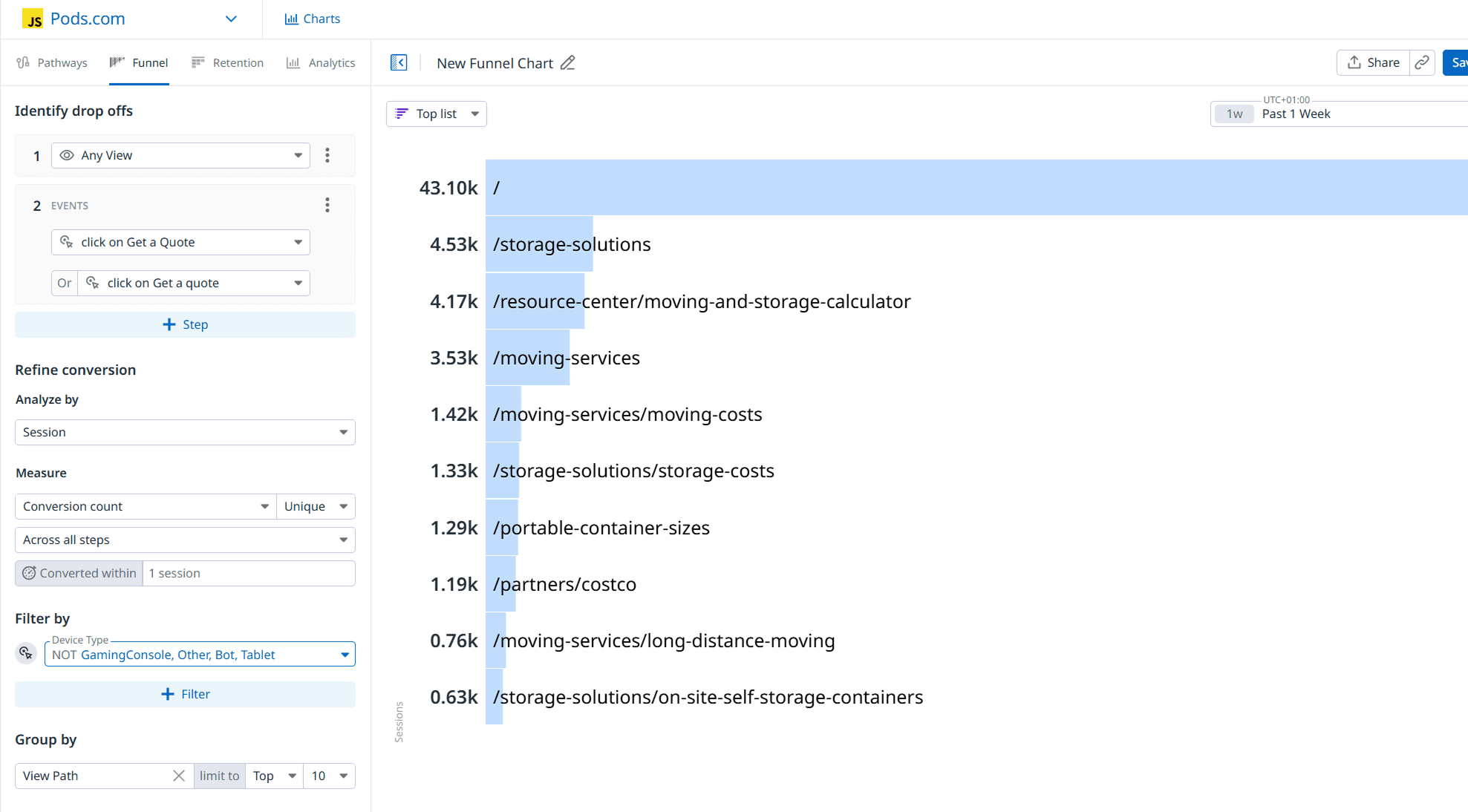
Quote clicks concentrated around utility content like calculators, cost pages, and container sizes.
Quote clicks concentrated around utility content like calculators, cost pages, and container sizes.
02
The Decision Workspace
The journey isn't linear. Users "loop" between hubs to triangulate information. This isn't friction—it's productive validation.
The journey isn't linear. Users "loop" between hubs to triangulate information. This isn't friction—it's productive validation.
03
Cross-Shopping Reality
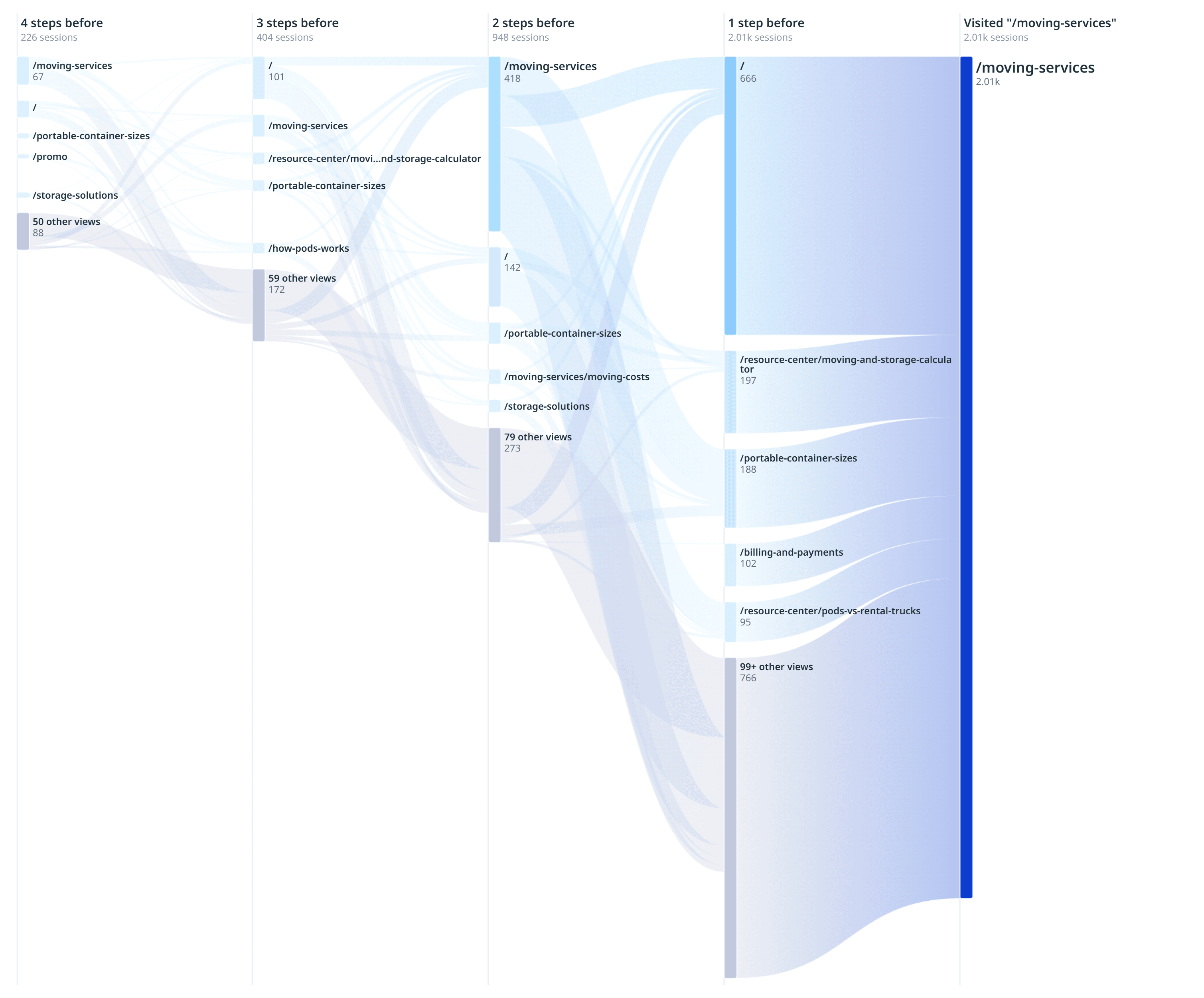
10% of users crossover between Moving and Storage early on. The IA shouldn't force premature commitment to a single service path.
10% of users crossover between Moving and Storage early on. The IA shouldn't force premature commitment to a single service path.
04
The "Universal Hubs"
Container Sizes and Costs act as universal bridges. These pages do the heavy lifting of translating broad curiosity into concrete intent.
Container Sizes and Costs act as universal bridges. These pages do the heavy lifting of translating broad curiosity into concrete intent.
Background
Overview
PODS was exploring a navigation and destination page redesign for the pre-quote experience, but we needed stronger evidence before making structural changes.
I analyzed how customers navigated high-intent pages to understand whether repeated page movement reflected confusion or a natural part of decision-making.
By pairing behavioral pathing with qualitative research, I found that customers were actively building confidence around fit, price, size, and service type before feeling ready to get a quote.
PODS was exploring a navigation and destination page redesign for the pre-quote experience, but we needed stronger evidence before making structural changes.
I analyzed how customers navigated high-intent pages to understand whether repeated page movement reflected confusion or a natural part of decision-making.
By pairing behavioral pathing with qualitative research, I found that customers were actively building confidence around fit, price, size, and service type before feeling ready to get a quote.
KEY STRATEGIC QUESTIONS
Which pages act as decision hubs versus dead ends?
Which pages act as decision hubs versus dead ends?
Are customers bouncing because of confusion or validation?
Are customers bouncing because of confusion or validation?
How often do people compare Moving and Storage before narrowing intent?
How often do people compare Moving and Storage before narrowing intent?
What information is required before a customer feels comfortable getting a quote?
What information is required before a customer feels comfortable getting a quote?
The Approach
Mapping the dominant 4-step pathways
Identify
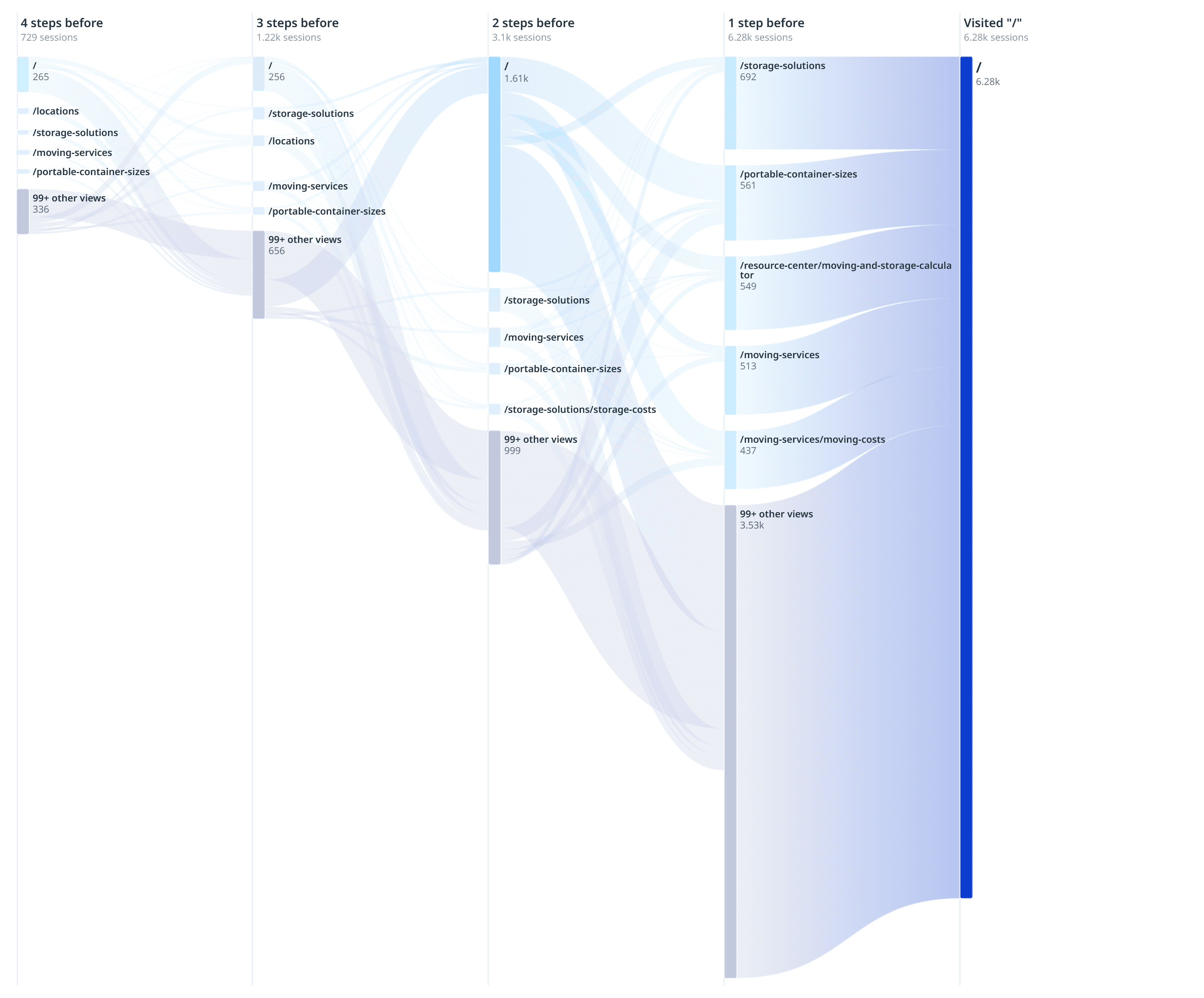
I ranked the highest-volume quote-driving pages to understand where conversion intent was concentrating.
I ranked the highest-volume quote-driving pages to understand where conversion intent was concentrating.
Map
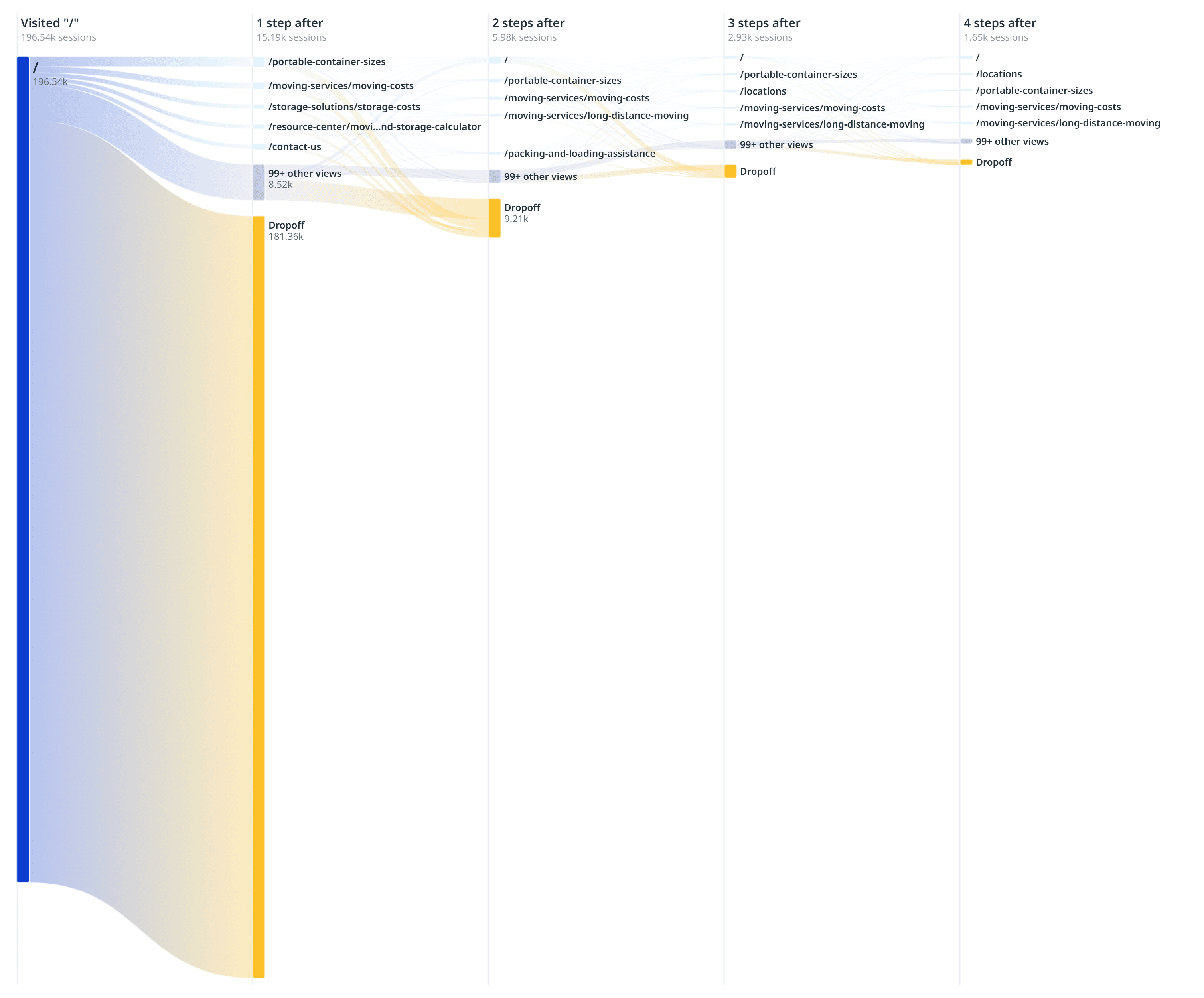
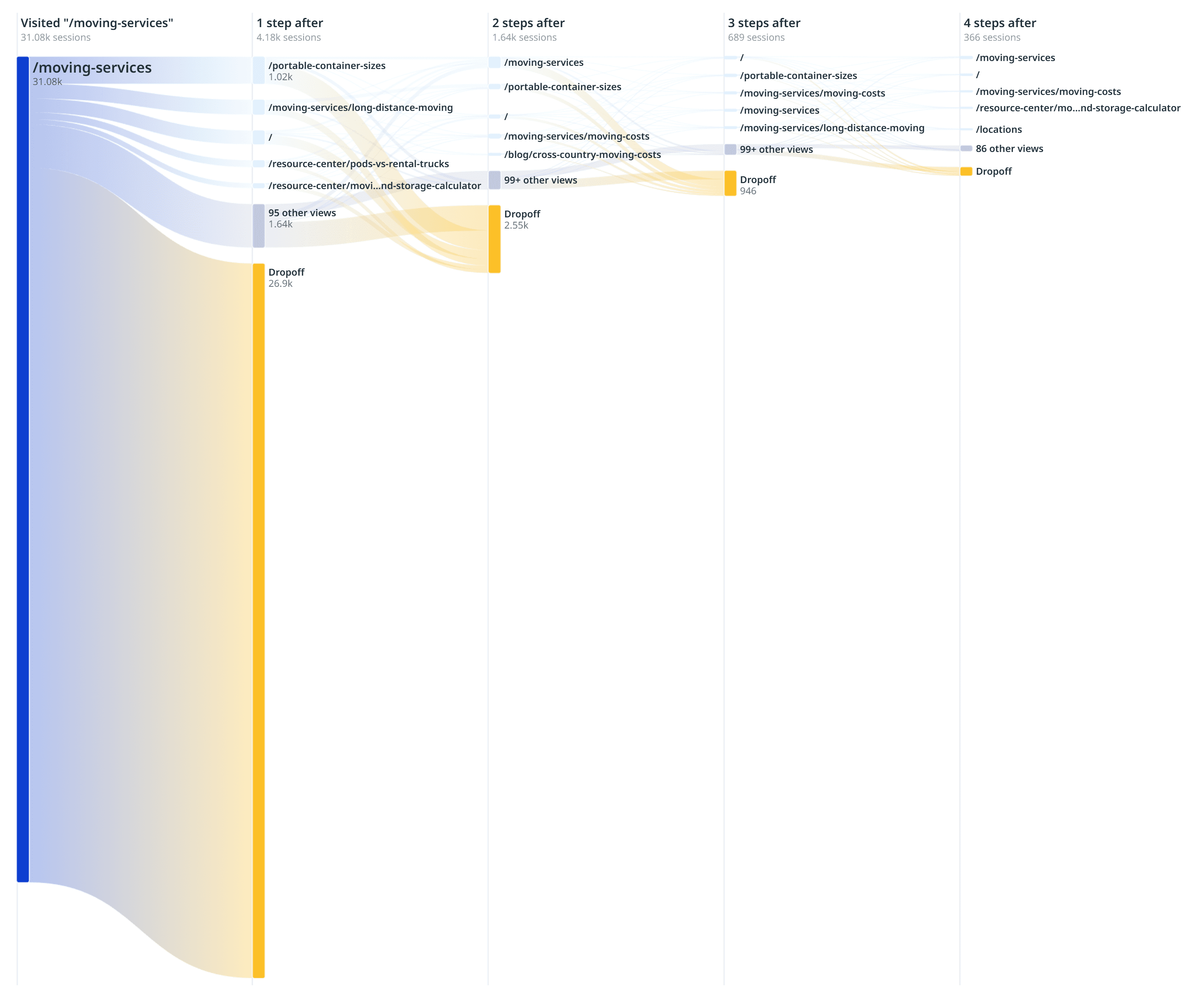
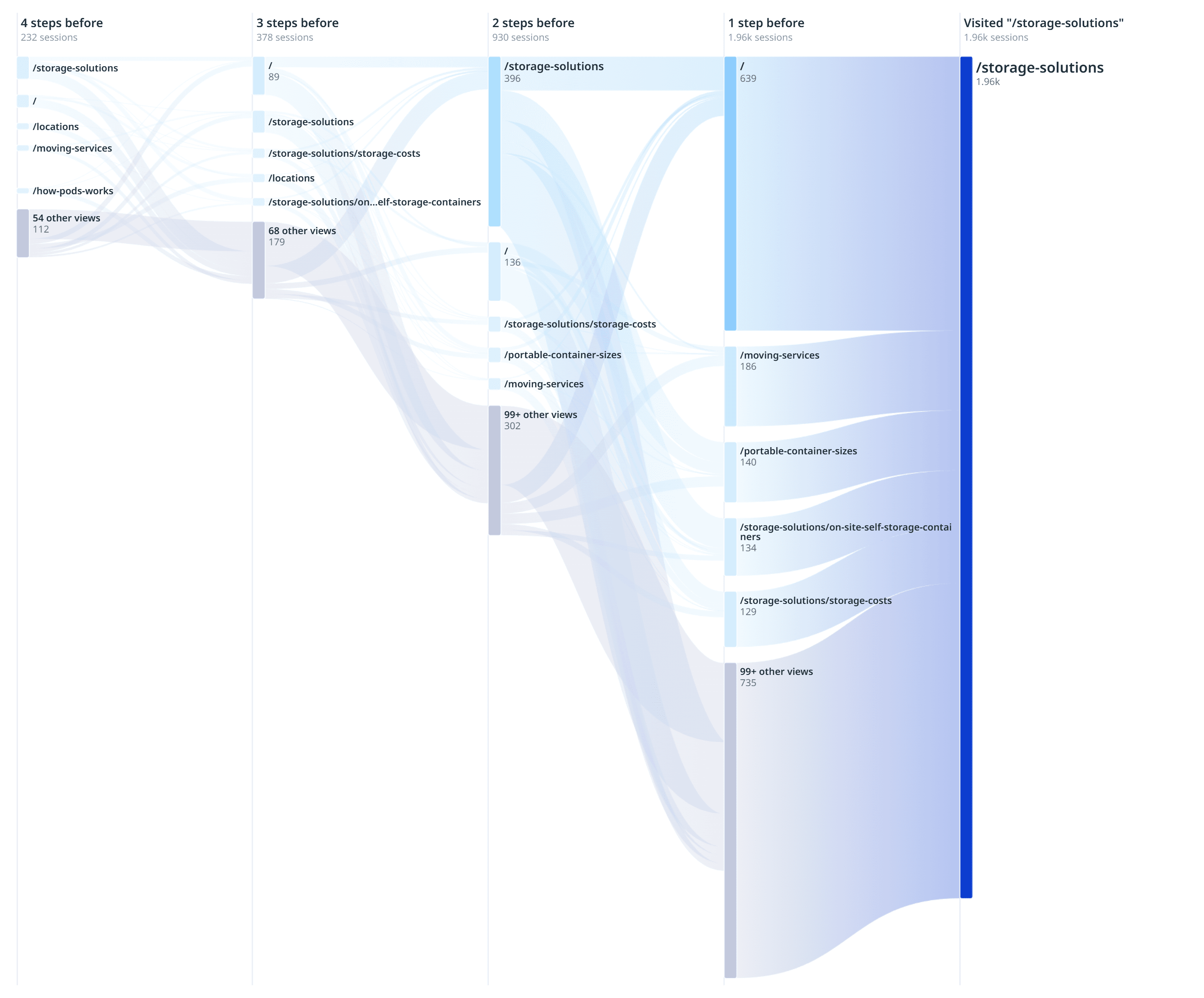
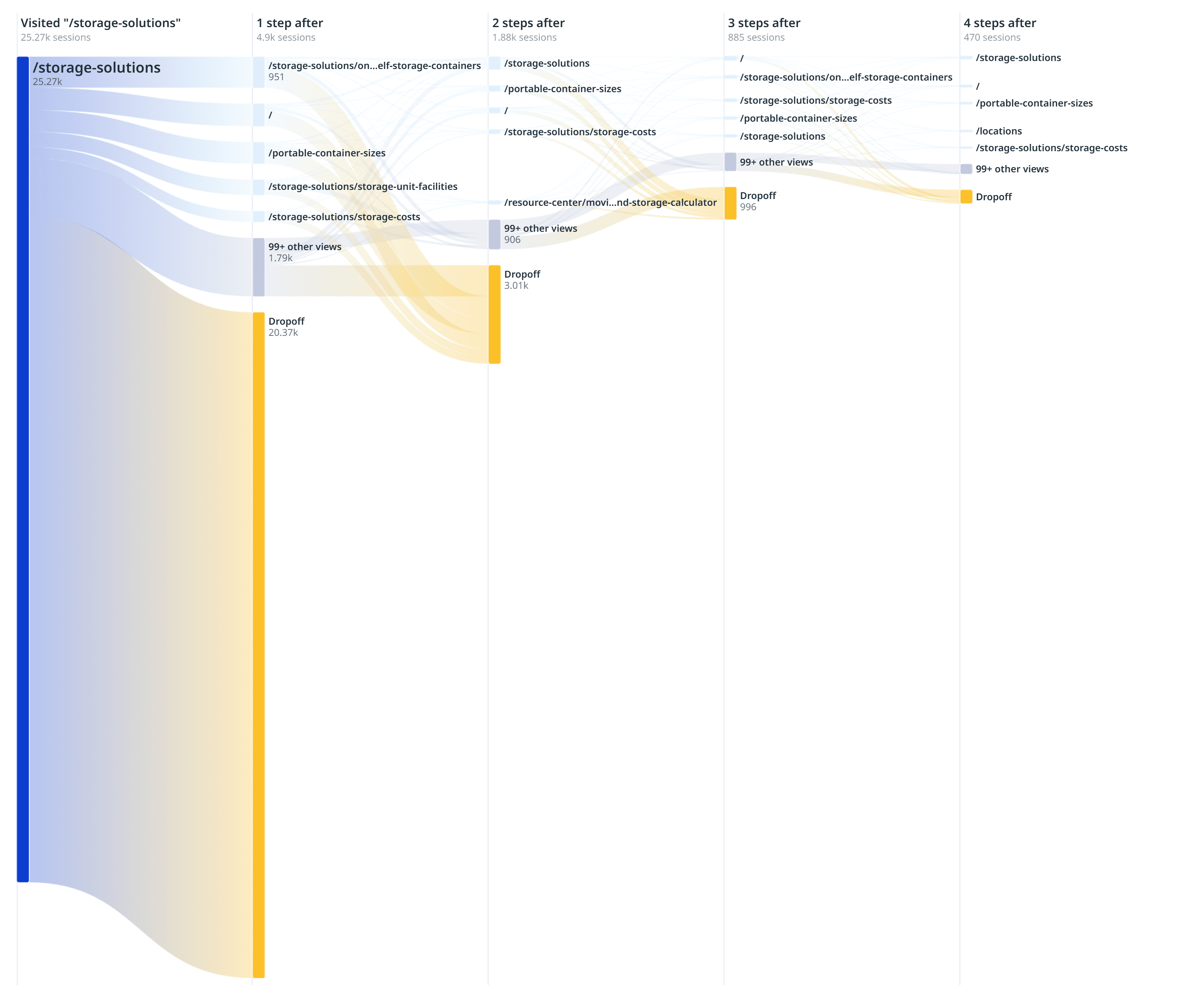
I analyzed before-and-after pathing across key quote-driving pages to identify repeated navigation patterns, common next steps, and shared decision hubs.
I analyzed before-and-after pathing across key quote-driving pages to identify repeated navigation patterns, common next steps, and shared decision hubs.
Synthesize
I paired those findings with insights from moderated customer research. That synthesis helped distinguish healthy confidence-building movement from true friction and explain not just where users went, but why.
I paired those findings with insights from moderated customer research. That synthesis helped distinguish healthy confidence-building movement from true friction and explain not just where users went, but why.
qualitative synthesis
qualitative synthesis
Research Explained the Loops.
Research Explained the Loops.
Research Explained the Loops.
Interviews showed that customers used quotes as exploratory tools, not final decisions. They looked for reassurance around pricing, fit, and flexibility—making the repeated "looping" look less like confusion and more like active confidence-building.
Interviews showed that customers used quotes as exploratory tools, not final decisions. They looked for reassurance around pricing, fit, and flexibility—making the repeated "looping" look less like confusion and more like active confidence-building.
Interviews showed that customers used quotes as exploratory tools, not final decisions. They looked for reassurance around pricing, fit, and flexibility—making the repeated "looping" look less like confusion and more like active confidence-building.
Exploratory Intent
Users start quotes to orient themselves, expecting the system to help them adapt details later.
Users start quotes to orient themselves, expecting the system to help them adapt details later.
Users start quotes to orient themselves, expecting the system to help them adapt details later.
Pricing Trust
Pricing
Visible pricing signals increased decision confidence and reduced hesitation in early exploration.
Visible pricing signals increased decision confidence and reduced hesitation in early exploration.
Visible pricing signals increased decision confidence and reduced hesitation in early exploration.
Mental Bundling
Users bundle needs (Moving + Storage) rather than thinking in rigid product buckets early on.
Users bundle needs (Moving + Storage) rather than thinking in rigid product buckets early on.
Users bundle needs (Moving + Storage) rather than thinking in rigid product buckets early on.
Familiar Starts
Customers often start with whichever service they understand first, expecting customization later.
Customers often start with whichever service they understand first, expecting customization later.
Customers often start with whichever service they understand first, expecting customization later.
Terminology Friction
Ambiguous industry terminology created friction and hesitation during pathing transitions.
Ambiguous industry terminology created friction and hesitation during pathing transitions.
Ambiguous industry terminology created friction and hesitation during pathing transitions.
Validation Loops
Repeated page-hopping was often a healthy behavior used to triangulate fit, cost, and logistics.
Repeated page-hopping was often a healthy behavior used to triangulate fit, cost, and logistics.
Repeated page-hopping was often a healthy behavior used to triangulate fit, cost, and logistics.
The Shift in Direction
The Shift in Direction
The Shift in Direction
From Scavenger Hunts
From Scavenger Hunts
Assuming users know exactly what they need and forcing them to hunt for prices and sizes across isolated pages.
Assuming users know exactly what they need and forcing them to hunt for prices and sizes across isolated pages.
To Guided Systems
To Guided Systems
Treating sizes, costs, and calculators as a connected ecosystem that surfaces the most likely next questions directly within hub pages.
Treating sizes, costs, and calculators as a connected ecosystem that surfaces the most likely next questions directly within hub pages.
Shift_01
Shift_01
Treat service hubs, cost pages, size content, and calculators as connected parts of one journey
Treat service hubs, cost pages, size content, and calculators as connected parts of one journey
Shift_02
Shift_02
Support guided transitions between Moving and Storage instead of forcing premature commitment
Support guided transitions between Moving and Storage instead of forcing premature commitment
Shift_03
Shift_03
Reduce scavenger-hunt behavior by surfacing likely next questions earlier
Reduce scavenger-hunt behavior by surfacing likely next questions earlier
finding 01 - Concentrated intent
Users frequently use service "hub" pages as anchors, exploring outwardly and bouncing to find bits of information before returning and clicking a quote CTA.
Users frequently use service "hub" pages as anchors, exploring outwardly and bouncing to find bits of information before returning and clicking a quote CTA.
finding 02 - Triangulation, not friction
Customers use a bundle of questions to orient themselves. The observed "looping" behavior is often healthy validation.
Customers use a bundle of questions to orient themselves. The observed "looping" behavior is often healthy validation.
Reframing the Strategy
Reframing the Strategy
Reframing the Strategy
EVOLUTION 01
EVOLUTION 01
From isolation
Standalone Pages
Standalone Pages
to systems
connected ecosystems
connected ecosystems
Instead of forcing users to "hunt" for sizes and costs, we treat these functional hubs as a single, connected system that anticipates the next question.
Instead of forcing users to "hunt" for sizes and costs, we treat these functional hubs as a single, connected system that anticipates the next question.
EVOLUTION 02
EVOLUTION 02
From assumptions
rigid taxonomies
rigid taxonomies
to fluidity
guided comparison
guided comparison
Customers were not always arriving with a clean Moving vs Storage decision already made. Pages need to reflect the way people think in real life: through needs, constraints, timing, and uncertainty.
Customers were not always arriving with a clean Moving vs Storage decision already made. Pages need to reflect the way people think in real life: through needs, constraints, timing, and uncertainty.
EVOLUTION 03
EVOLUTION 03
From entry points
generic pages
generic pages
to intelligence
intelligent routing
intelligent routing
The homepage evolved from a generic welcome mat to a high-intent router, funneling users directly into the specific confidence-building content they need.
The homepage evolved from a generic welcome mat to a high-intent router, funneling users directly into the specific confidence-building content they need.
EVOLUTION 04
EVOLUTION 04
From friction
accidental bouncing
accidental bouncing
to clarity
faster confidence
faster confidence
We preserve the healthy "looping" behavior users need, but make those transitions faster and more intentional, reducing the cognitive load required to start a quote.
We preserve the healthy "looping" behavior users need, but make those transitions faster and more intentional, reducing the cognitive load required to start a quote.
What changed…
Pre-Quote confidence loop model
Primary Deliverable
A visual framework used to guide navigation and destination page decisions across the WIP redesign.
A visual framework used to guide navigation and destination page decisions across the WIP redesign.
Support hubs Moved Upstream
Because users repeatedly moved between support pages and service hubs, we consolidated support artifacts onto hub pages to reduce back-and-forth validation.
Because users repeatedly moved between support pages and service hubs, we consolidated support artifacts onto hub pages to reduce back-and-forth validation.
Evidence-Led IA Direction
Turned behavioral paths and interview insights into IA, content, and routing decisions.
Thanks for stopping by, let's chat! 👋